What to Look For in Stuffsacks, Dry Bags & Pouches
The category looks simple but the wrong closure or material for the job means wet gear or wasted weight.
Closure Type
Roll-tops seal out water — use them anywhere moisture is a real risk: rain covers, river crossings, sweaty pack interiors. Drawstring closures are lighter and faster for dry-only jobs like stuffing a jacket, shirts, or camp layers. Don't use a roll-top where a drawstring does the same job — it adds unnecessary bulk and fuss.
Waterproofing vs. Organization
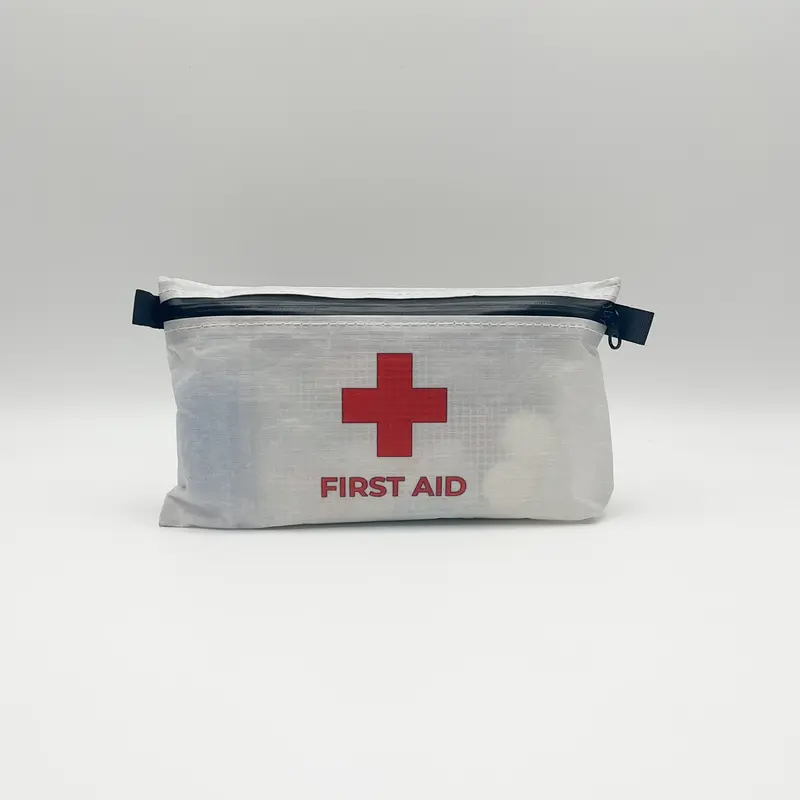
Not everything needs to be waterproof. A silnylon drawstring sack is enough for clothing. Electronics, first aid, and documents warrant a proper roll-top or a small sealed pouch. For backpacking, one large waterproof liner plus smaller internal pouches is cleaner than stuffing everything into individual dry bags — less time packing, same protection.
Size System
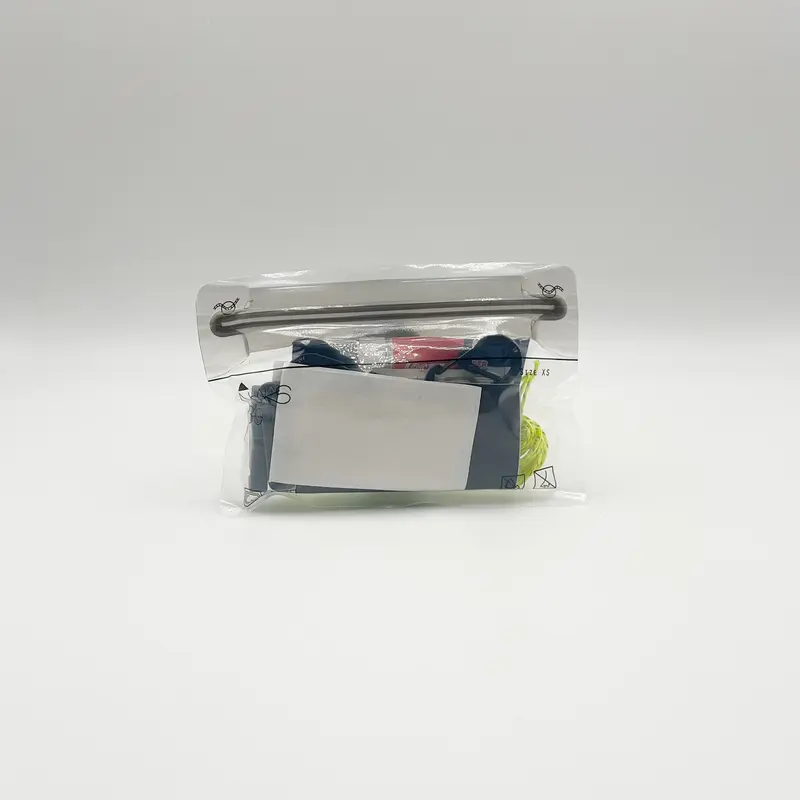
Think in roles, not individual products. Small pouches (1–3L) handle electronics, cables, or a first-aid kit. Mid-size sacks (5–10L) cover clothing layers or food. A large sack (20–30L) works as a full pack liner. Buying a matched set in graduated sizes makes the system faster to use — you know exactly where things live.
Use Context
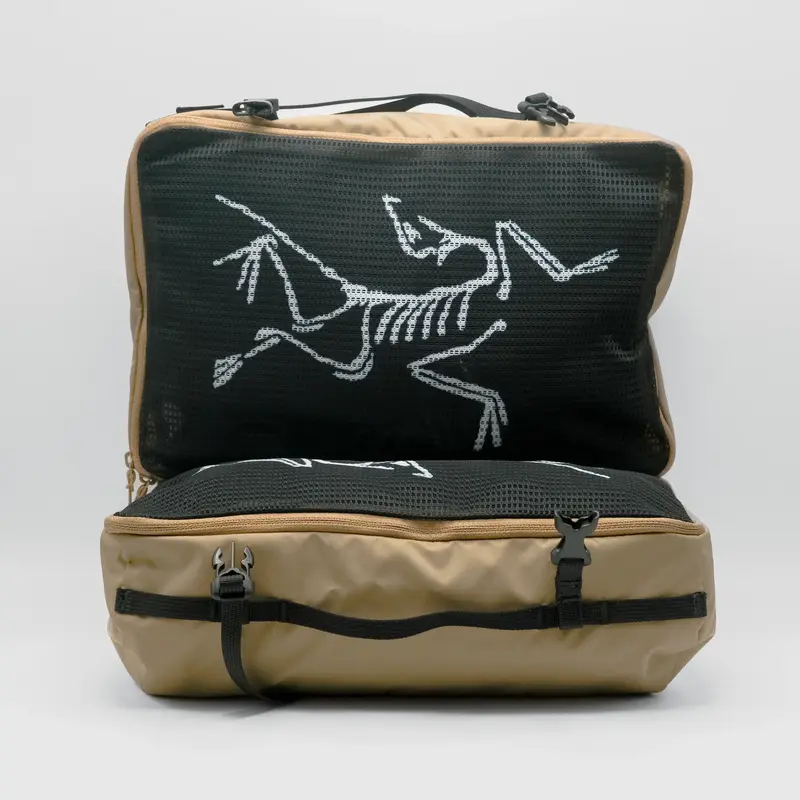
Backpacking calls for waterproof roll-tops and light materials — every gram counts and weather changes fast. Travel and car camping have more tolerance for weight, so breathable fabric organizers work well inside a suitcase or duffel, keeping gear sorted without trapping moisture from damp clothes.
What a Good Stuffsack or Dry Bag Has
Fabric
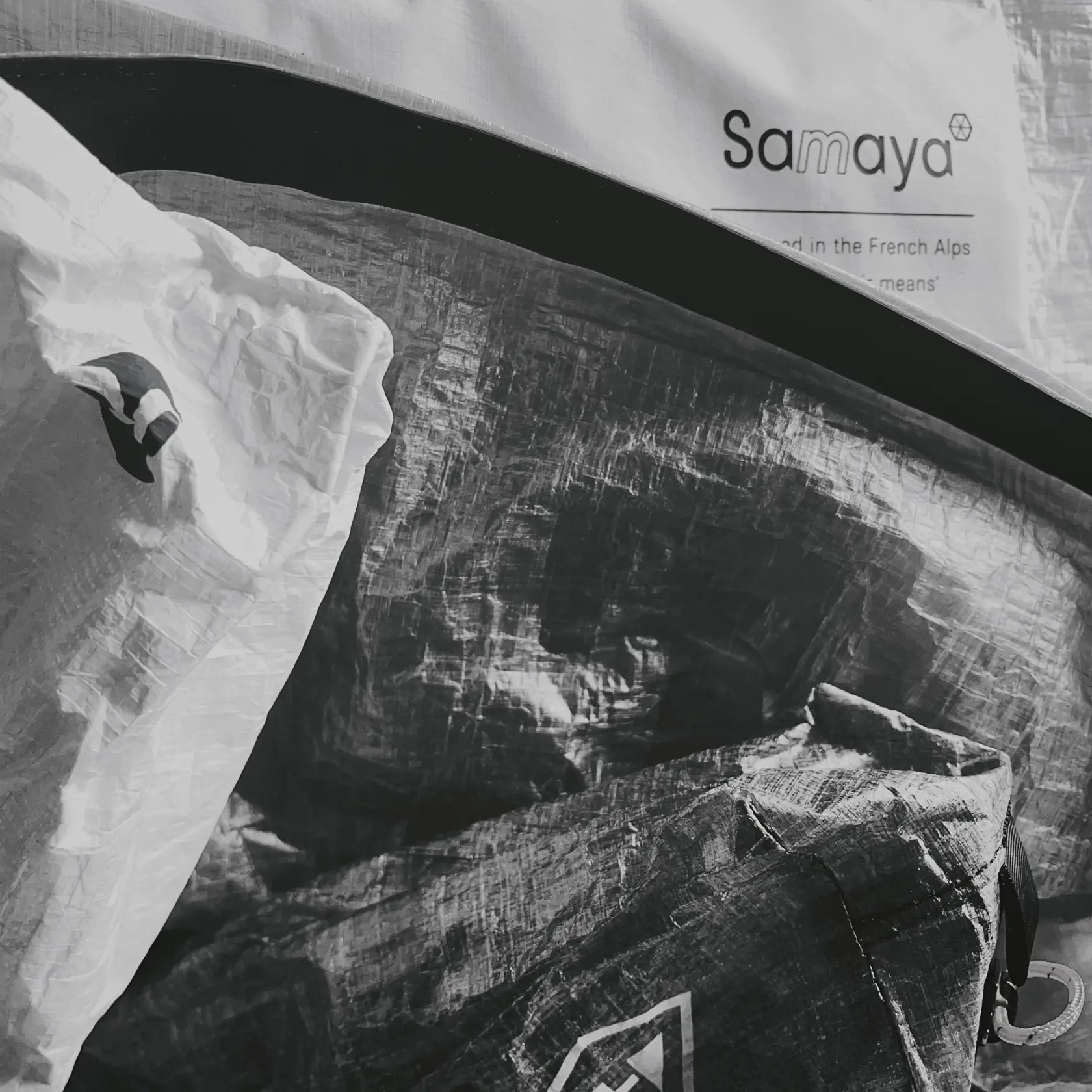
Silnylon (silicone-coated nylon) is the workhorse — light, water-resistant, and affordable. It doesn't fully seal out water but handles light moisture and packs small. DCF (Dyneema Composite Fabric) is the step up: lighter than silnylon, inherently waterproof, and extremely tough for its weight. It costs significantly more but earns it on long trips where weight and reliability matter. Standard coated nylon sits in between — heavier but durable and budget-friendly.
Closure & Sealing
Roll-tops need at least three full rolls to seal properly — look for a buckle or clip at the end that actually locks flat. Welded or taped seams matter as much as the closure itself; stitched seams without taping will leak at the needle holes. Drawstring sacks don't need waterproofing, but a cord lock that stays put under load saves frustration.
Volume Markings & Interior Color
A light-colored or white interior makes finding small items far easier — especially in low light. Some sacks include volume markings, which help when packing a bear canister or rationing space across a multi-day trip. Not essential, but a thoughtful detail worth noticing.
Weight
Stuffsacks accumulate fast — if you run five or six, the weight adds up. DCF sacks come in under 30g at most sizes. Silnylon runs 30–60g depending on volume. Avoid heavy canvas or uncoated nylon for backpacking; save those for base camp or car camping use where weight is irrelevant.
Attachment Points
A simple loop or daisy chain lets you clip a stuffsack to a gear loop or hang it inside a shelter. Not critical, but useful for a first-aid pouch or anything you need to grab quickly without digging.
Building Your Stuffsack System
Start with closure type — roll-top where water is a threat, drawstring everywhere else. Then build by role: a liner for the main compartment, a few mid-size sacks for clothing and food, small pouches for electronics and first aid. Silnylon covers most needs without breaking the budget; upgrade to DCF where weight or hard waterproofing actually matters. Color-code or sort by size — either works, as long as you can find what you need at the end of a long day.