What to Look For in a Flashlight
Three decisions cover everything most people actually need from a flashlight.
Size — The Only Spec That Determines Carry
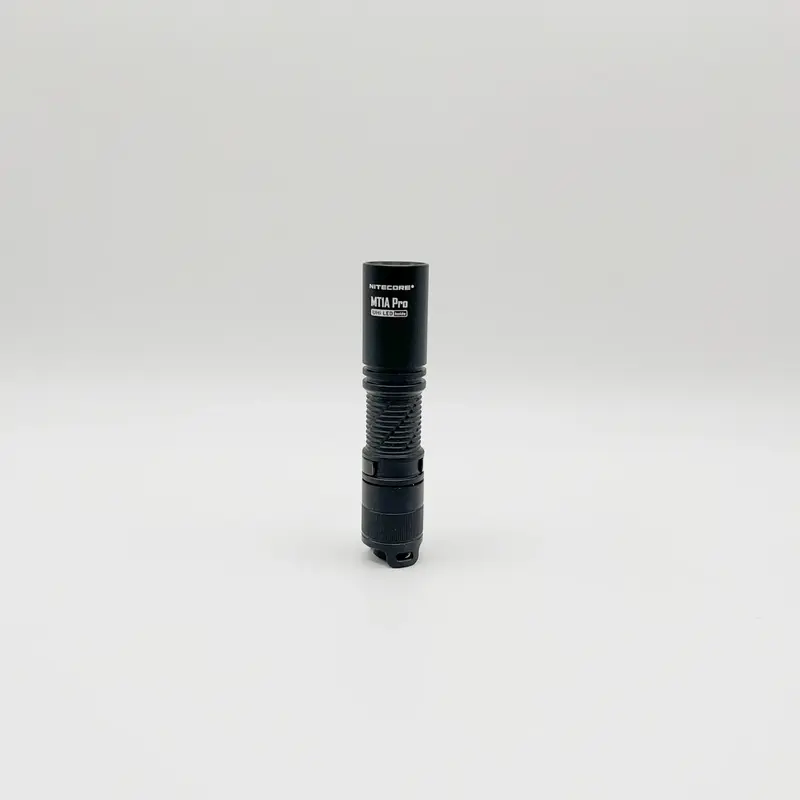
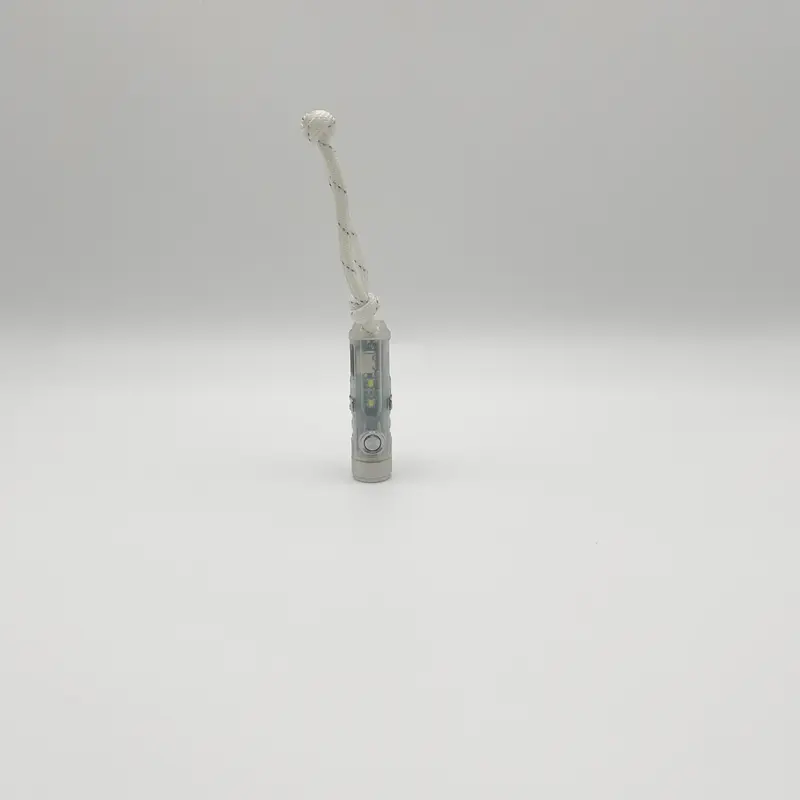
If the light doesn't disappear in a front pocket, you'll stop carrying it within a week. For EDC, that means under 10cm and under 60g — lights like the Rovyvon Aurora or Nitecore MT1A sit in that range and vanish in a pocket or on a keychain. Larger, more powerful lights exist and have their place; they're just not the ones you reach for at the campsite or on the trail.
Battery Type — Rechargeable vs. Universal
USB-C rechargeable lights are the most convenient day-to-day: one cable, no batteries to stock, quick top-up at any power source. But AA and AAA-powered lights have a quiet advantage — you can buy fresh batteries in any gas station, grocery store, or hardware shop anywhere in the world. For travel and hiking in remote areas, a light that runs on AA keeps you covered when a cable doesn't. Some lights offer both: a rechargeable cell with an AA fallback mode.
Lumens — How Much Is Actually Enough
The EDC flashlight market has turned lumen counts into a spec race that's mostly irrelevant. For hiking, camp tasks, and finding things in the dark, 150–500 lumens is more than enough — and most quality compact lights exceed that comfortably. What actually matters is having a usable low mode (5–30 lumens) for close-up work without destroying your night vision, and a runtime on mid brightness that lasts a full evening. Max output is rarely the mode you use.
What a Good Flashlight Has
Output Modes
A flashlight with only one output level is a compromise waiting to happen — too bright for reading a map in a tent, too dim when you actually need reach. Look for at least three levels: a moonlight or low mode under 10 lumens, a usable mid around 100–300 lumens, and a high for when you need throw. Lights with a simple UI — one button, click-to-cycle — beat anything with mode groups or memorised sequences.
Switch Design
Side switches are the standard on compact EDC lights; they're easy to find by feel in the dark and keep the tail free for standing the light upright. Tail switches give better one-handed control for a handheld beam. Either works — what to avoid is a switch that activates in a pocket. A physical lockout (half-twist to disconnect or a recessed switch) prevents accidental drain when the light is clipped or pocketed.
Build and Water Resistance
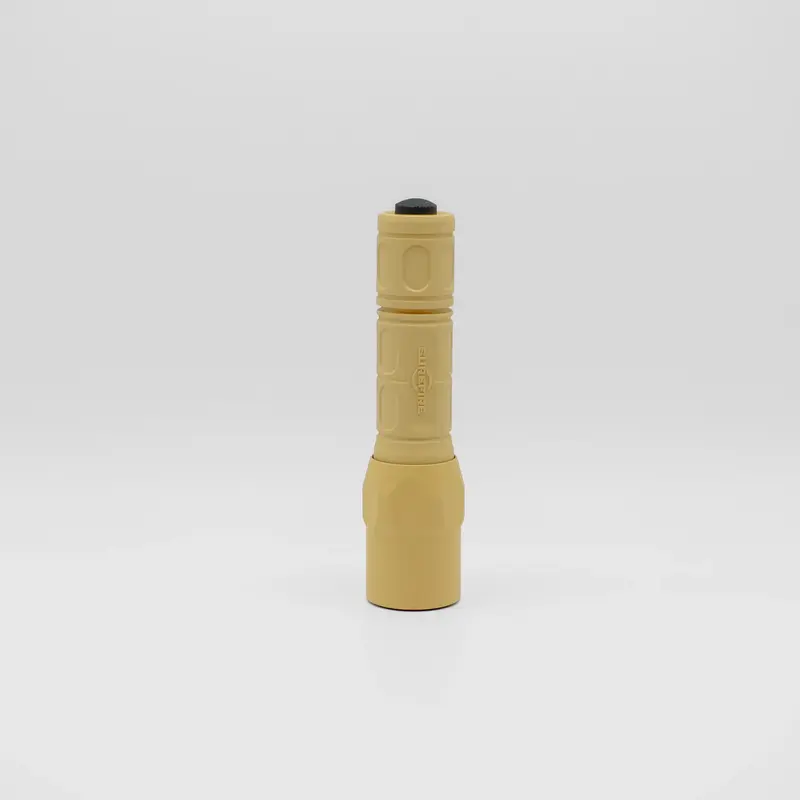
Aircraft-grade aluminium is the standard material — light, strong, dissipates heat from the LED. Solid plastic construction (as found on Surefire lights) adds impact resistance at slightly more weight. Either is durable enough for daily use and outdoor carry. Water resistance is rated by IPX: IPX4 handles rain and splashes, IPX7 means full submersion to 1m. For hiking and camping, IPX7 or better is worth looking for.
Pocket Clip and Carry Options
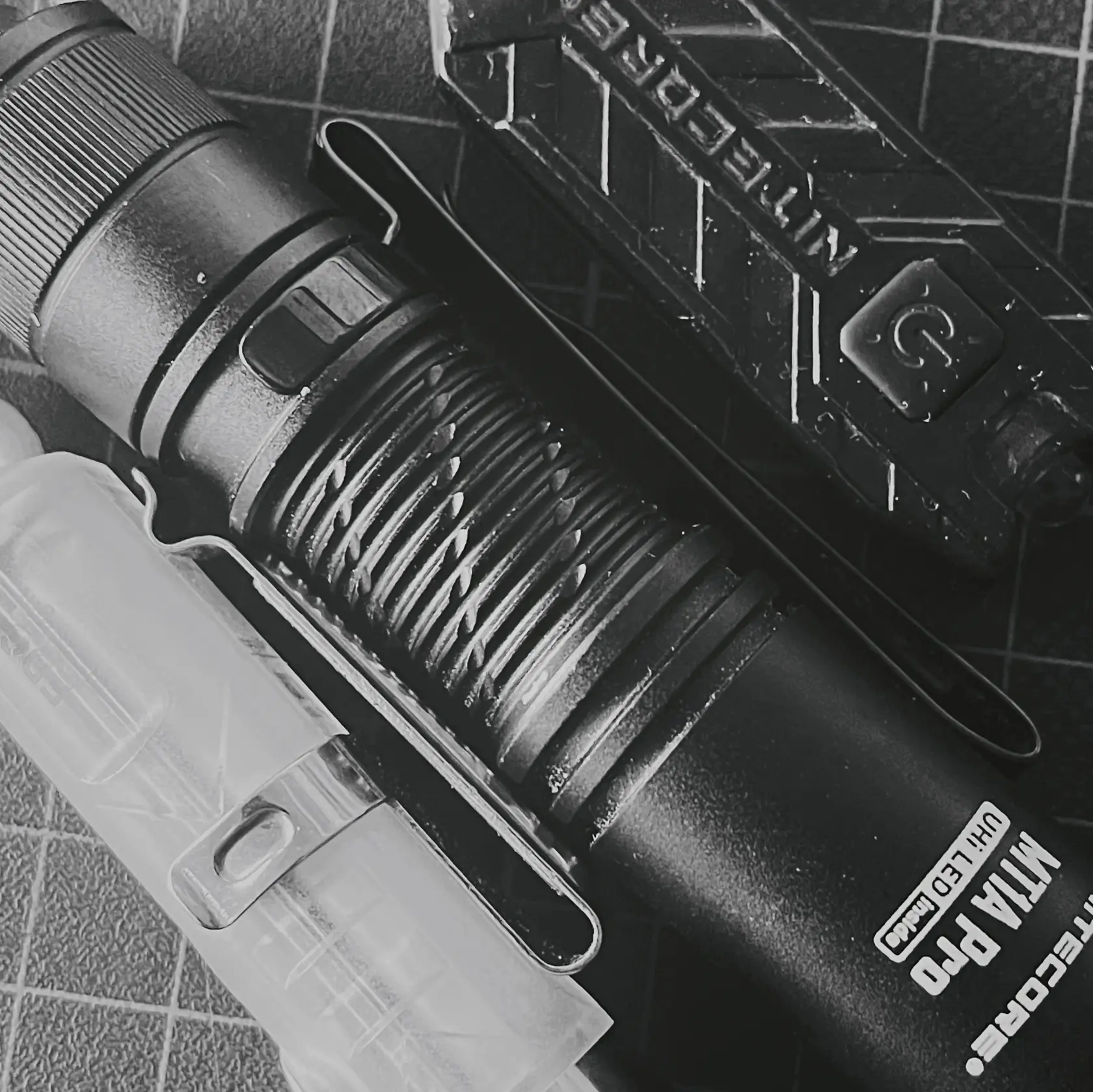
A good clip positions the light deep in the pocket with just the tail accessible — less snagging, less print, faster deployment. Reversible clips let you carry head-up or head-down based on preference. Keychain attachment rings are the right call for sub-50mm lights; they're the difference between carrying a light every day and leaving it in a drawer.
The Flashlight Worth Carrying
One compact, well-built light covers 95% of what anyone actually needs — camping, hiking, emergencies, finding things in the dark. The lumen race is marketing; the spec that matters is whether it's in your pocket when you need it. Pick something small, choose your battery strategy based on where you travel, and stop overthinking the rest. A simple light used every day beats an impressive one left at home.