
What to Look For in a Camping Stove
Match the stove to the trip first. Everything else follows from that.
Trip Type
Car camping, group backpacking, and solo trekking each need a different stove. Car camping rewards stability and power — cassette burners handle heavy pots and real meals. Group backpacking needs a stable, reliable platform that multiple people depend on. Solo trekking is where weight and wind performance matter most — and that's a completely different category.
Fuel Type
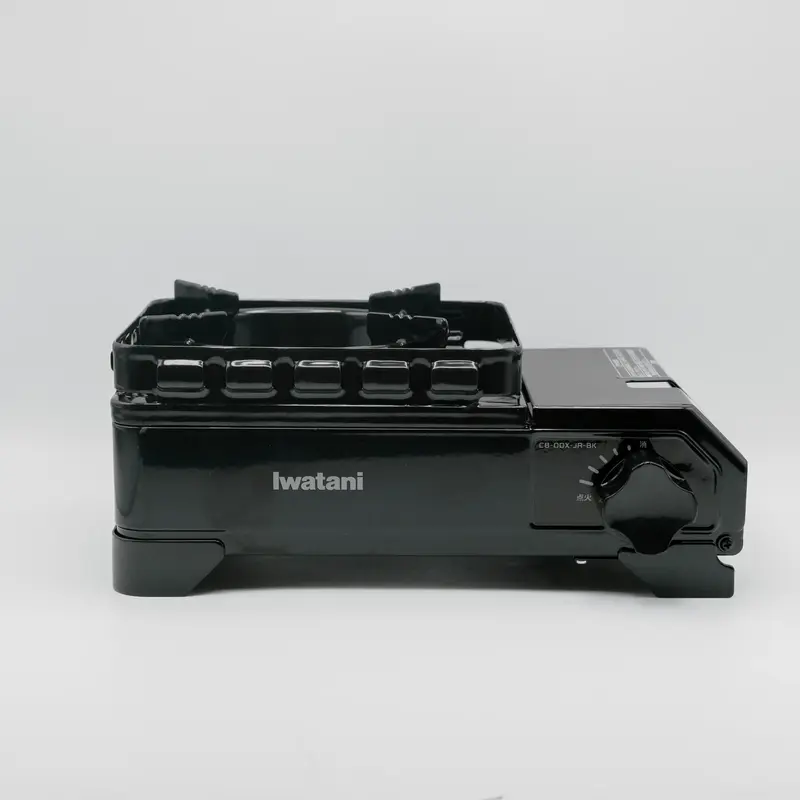
Cassette butane is ideal for car camping — easy to swap, good burn time, widely available. For backpacking, an isobutane/propane mix canister outperforms pure butane in cold and at altitude. Liquid fuel (white gas) is the choice for extreme cold or expeditions where canister gas fails. Stick to one system and know its limits before you go.
Stability
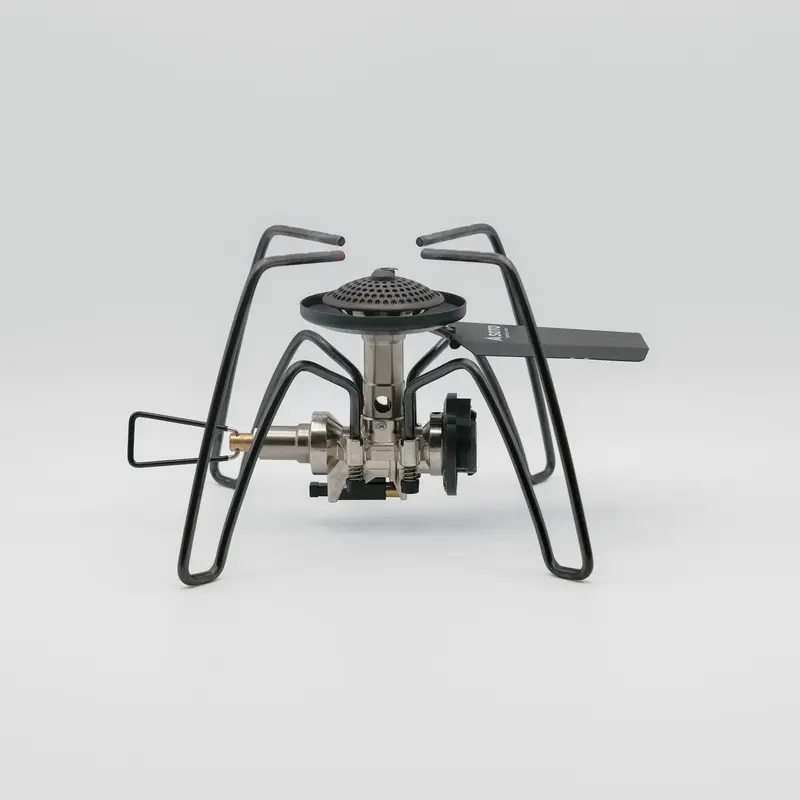
Stability matters more than most guides admit. A stove that tips under a full Dutch oven or wide pan isn't a cooking stove — it's a liability. Look for wide legs, solid aluminum feet, and a low center of gravity. For canister stoves used in group cooking, wide pot support arms and a canister stabilizer are non-negotiable.
Integrated Systems — Skip Them
Combo systems like Jetboil are fast boilers, not cooking tools. The integrated aluminum-coated pots limit what you can actually cook, and the sealed system locks you into one mode. If all you need is boiling water, fine — but if you want to cook real food at camp, buy a proper burner and a proper pot separately.
What a Good Camping Stove Has
Burner Head
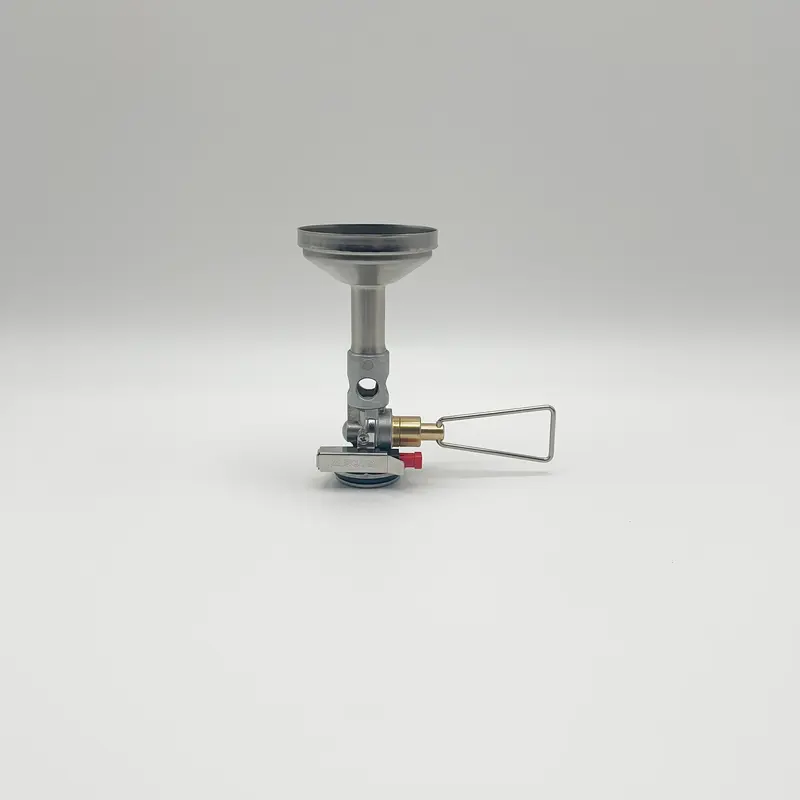
The burner head design determines wind resistance and heat distribution. Recessed burners with a lip around the head block wind from killing the flame without choking combustion air — the SOTO Windmaster is the benchmark here. Open-flame heads are simpler but suffer badly in wind. For car camping, a wide burner head spreads heat more evenly across large pots and pans.
Ignition
Piezoelectric ignition is the standard — push to spark, no lighter needed. Quality varies: a reliable piezo fires consistently in cold and wet conditions; cheap igniters fail fast. Build quality is the tell. Always carry a lighter as backup regardless of how good the igniter is.
Legs and Base
Wide aluminum legs are the difference between a stable platform and a nervous one. For car camping stoves, the legs need to handle real weight — 10kg or more if you're cooking with cast iron. On canister stoves, check that the legs lock firmly open and sit flat. A separate canister stabilizer adds serious security when cooking for a group.
Flame Control
Fine simmer control separates a cooking stove from a boiling stove. A smooth, linear valve adjustment from full blast to low simmer means you can actually cook — not just heat water. If the valve jumps from high to off with nothing in between, that's a build quality issue worth avoiding.
The Stove That Fits Your Trip
The use case decides everything. Solo and fast in the mountains — nothing beats the SOTO Windmaster for wind resistance and fuel efficiency. Family or group backpacking — the SOTO ST-310 Regulator gives you the stability and reliability to cook real food at camp. Car camping — a cassette burner like the Iwatani Maru Jr handles serious heat and heavy pots without drama. Build quality is the through-line: a well-made stove fires reliably in cold, wet, and wind, and keeps performing trip after trip.