What to Look For in a Backpack
Four things drive the right choice. Get these right and everything else falls into place.
Torso Fit
The one decision most people skip — and regret. Your torso length, measured from your C7 vertebra (the bony bump where neck meets shoulders) down to your iliac crest (top of the hip bones), determines which pack actually fits your body. Most adults fall between 38–53 cm. Buy to that measurement, not your height. A wrong-fitting pack loaded with the right gear will still wreck your back.
Capacity for Your Use
Match capacity to how you actually move — not to hypothetical trips. A 20–25L daypack handles city carry, short hikes, and overhead bins. A 35–50L framed pack is the range for multi-day hiking. Going bigger rarely makes you more versatile — it just means more space to fill and more weight to carry. Own the right size for your real use case.
Pack Weight
The pack's own weight eats into your load budget before you've packed a single item. A heavy pack is a bad pack — full stop. Compare base weights before you compare features. A well-designed pack in good fabric should feel like it's working with you, not against you.
Design Simplicity
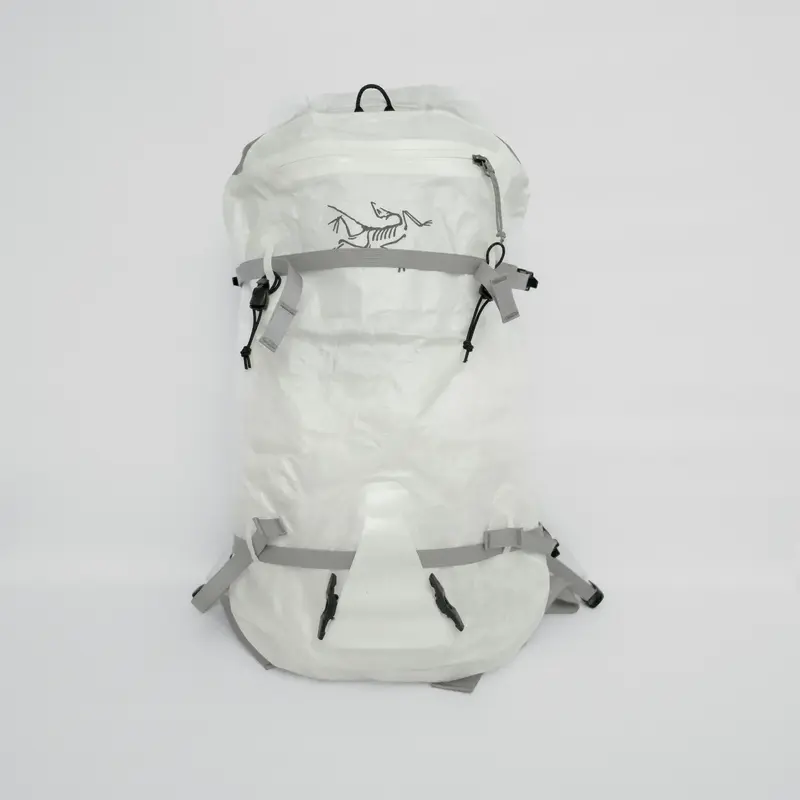
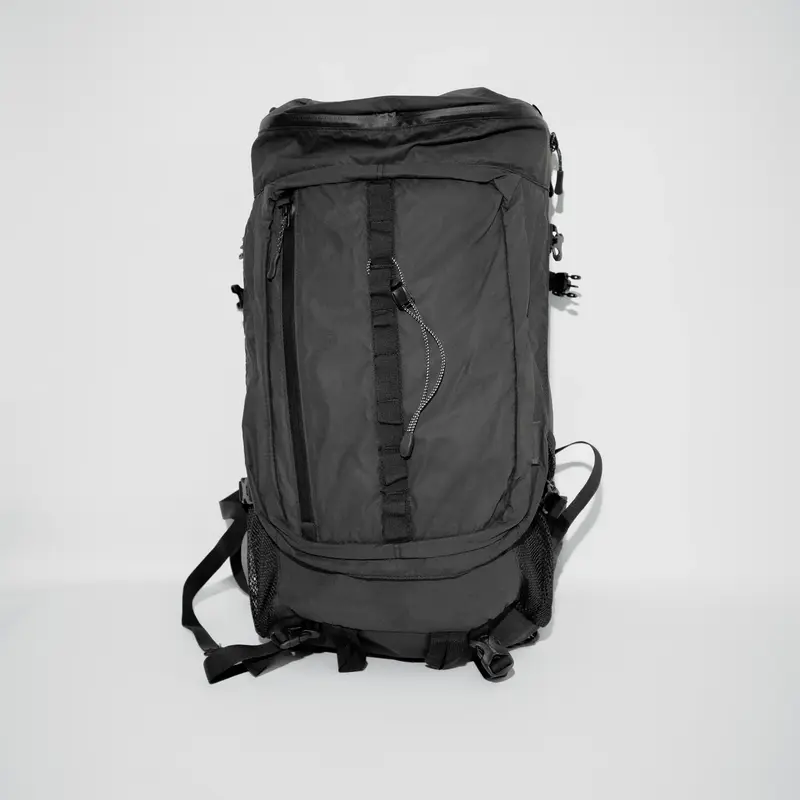
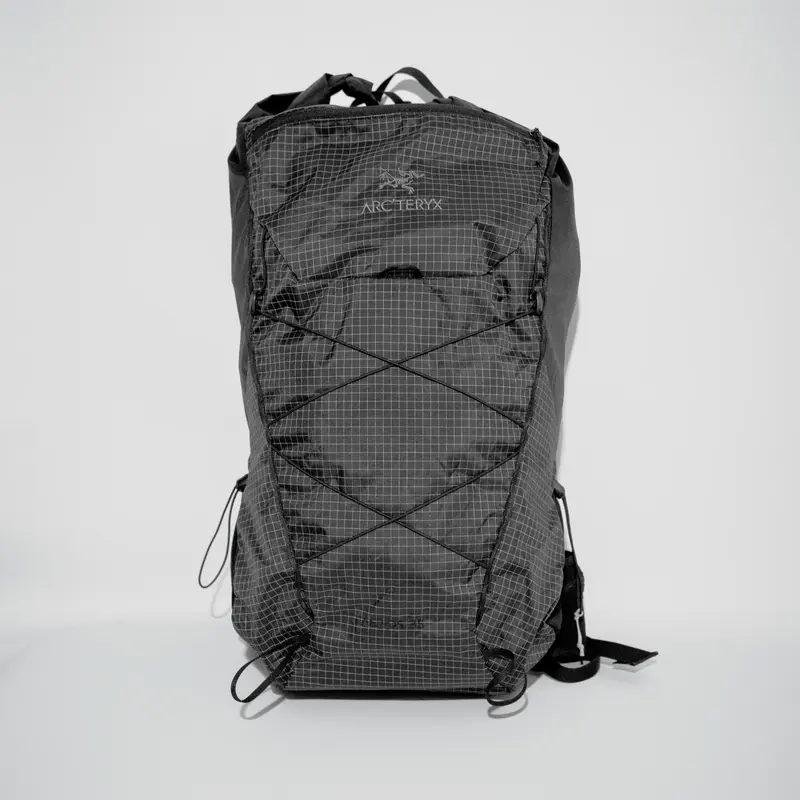
Every external pouch, bungee loop, and decorative strap adds weight and visual noise. If a pack has pockets, they should lie flat and integrate cleanly — not balloon out and ruin the silhouette. Compression straps earn their place. Daisy chains and gear loops rarely do. The best packs look right empty and disappear when loaded.
Features of a Well-Built Pack
Fabric
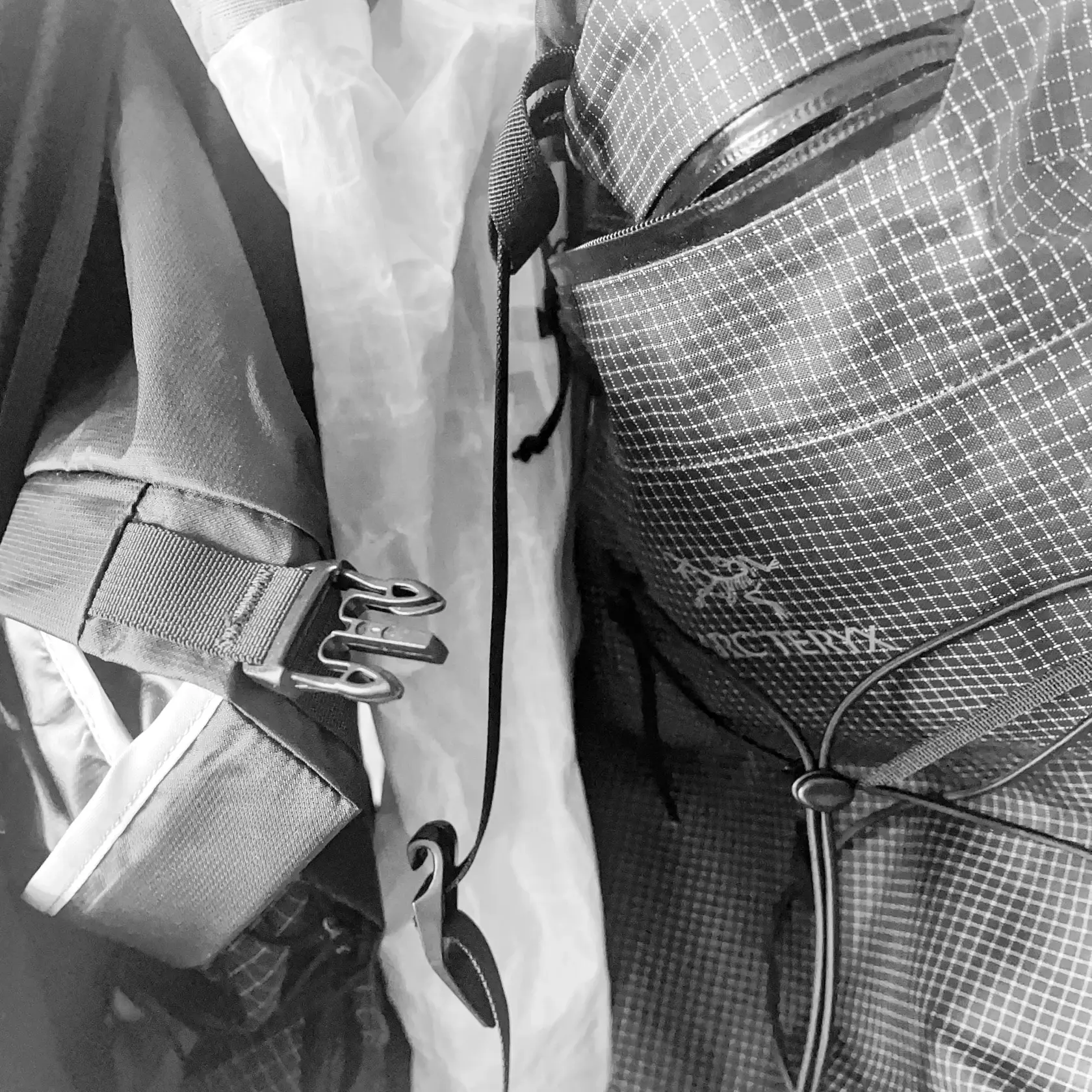
Nylon done right is excellent — light, tough, and proven across decades of hard use. The problem isn't nylon, it's heavy nylon: thick, stiff, army-surplus-style fabric that adds bulk without adding value. Light nylon is a smart choice. New fabrics like DCF and Aluula take it further — genuinely lighter, inherently waterproof, and worth every penny if budget isn't the constraint. They're not replacements for nylon, just a different tool. Match the fabric to the use.
Back Panel
Everything that touches your back makes you sweat — mesh panels move the contact point, they don't eliminate it. What actually matters is panel shape and firmness. A hard-pressed, well-contoured back panel sits close, distributes load evenly, and doesn't create pressure points on long carries. Don't chase ventilation claims — chase fit and shape.
Frame
Frameless packs are a niche tool for ultralight hikers who know exactly what they're trading away. For general use, they're a compromise — soft, load-shifting, and hard on your back over distance. A simple framesheet or aluminium stays change everything. Frame and hip belt work together: a good frame attached to a thin hip belt transfers nothing. Evaluate both at once.
Straps & Hip Belt
Shoulder straps should sit stable under load — not twist, not dig into your chest. Simpler attachment systems, like minimal hook closures instead of bulky buckles, are lighter and just as functional when done well. Chest straps should guide the shoulder straps, not lock down your torso — oversized ones restrict breathing and movement. Same goes for hip belts: size to your use. A hip belt that wraps your iliac crest correctly moves weight off your shoulders. One that's too big, too padded, or sits wrong just adds bulk and gets in the way.
Zippers
Learn to recognise a quality zipper by looking at the pack — consistent coil, solid slider, smooth pull. If it drags or catches in the shop it'll fail when it matters. Weather-resistant coated zippers are worth it on main compartments for wet conditions. Everything else: smooth movement is the only test that counts.
Finding the Pack That Fits
Start with torso fit — everything else is secondary to a pack that actually sits right on your body. Go light in the fabric, skip frameless unless you're deep into ultralight territory and know the tradeoff, and don't let oversized hip belts or chest straps talk you into thinking bigger means better. A clean, well-framed pack in light nylon — or DCF if budget allows — that fits your torso and matches your actual use will carry better than anything built around features and ventilation claims.